Ultra was the designation adopted by British military intelligence in June 1941 for wartime signals intelligence obtained by breaking high-level encrypted enemy radio and teleprinter communications at the Government Code and Cypher School (GC&CS) at Bletchley Park. Ultra eventually became the standard designation among the western Allies for all such intelligence. The name arose because the intelligence obtained was considered more important than that designated by the highest British security classification then used (Most Secret) and so was regarded as being Ultra Secret. Several other cryptonyms had been used for such intelligence. The code name "Boniface" was used as a cover name for Ultra. In order to ensure that the successful code-breaking did not become apparent to the Germans, British intelligence created a fictional MI6 master spy, Boniface, who controlled a fictional series of agents throughout Germany. Information obtained through code-breaking was often attributed to the human intelligence from the Boniface network. The U.S. used the codename Magic for its decrypts from Japanese sources, including the "Purple" cipher. Much of the German cipher traffic was encrypted on the Enigma machine. Used properly, the German military Enigma would have been virtually unbreakable; in practice, shortcomings in operation allowed it to be broken. The term "Ultra" has often been used almost synonymously with "Enigma decrypts". However, Ultra also encompassed decrypts of the German Lorenz SZ 40/42 machines that were used by the German High Command, and the Hagelin machine. Many observers, at the time and later, regarded Ultra as immensely valuable to the Allies. Winston Churchill was reported to have told King George VI, when presenting to him Stewart Menzies (head of the Secret Intelligence Service and the person who controlled distribution of Ultra decrypts to the government): "It is thanks to the secret weapon of General Menzies, put into use on all the fronts, that we won the war!" F. W. Winterbotham quoted the western Supreme Allied Commander, Dwight D. Eisenhower, at war's end describing Ultra as having been "decisive" to Allied victory. Sir Harry Hinsley, Bletchley Park veteran and official historian of British Intelligence in World War II, made a similar assessment of Ultra, saying that while the Allies would have won the war without it, "the war would have been something like two years longer, perhaps three years longer, possibly four years longer than it was." However, Hinsley and others have emphasized the difficulties of counterfactual history in attempting such conclusions, and some historians, such as John Keegan, have said the shortening might have been as little as the three months it took the United States to deploy the atomic bomb. == Sources of intelligence == Most Ultra intelligence was derived from reading radio messages that had been encrypted with cipher machines, complemented by material from radio communications using traffic analysis and direction finding. In the early phases of the war, particularly during the eight-month Phoney War, the Germans could transmit most of their messages using land lines and so had no need to use radio. This meant that those at Bletchley Park had some time to build up experience of collecting and starting to decrypt messages on the various radio networks. German Enigma messages were the main source, with those of the German air force (the Luftwaffe) predominating, as they used radio more and their operators were particularly ill-disciplined. === German === ==== Enigma ==== "Enigma" refers to a family of electro-mechanical rotor cipher machines. These produced a polyalphabetic substitution cipher and were widely thought to be unbreakable in the 1920s, when a variant of the commercial Model D was first used by the Reichswehr. The German Army (Heer), Navy, Air Force, Nazi party, Gestapo and German diplomats used Enigma machines in several variants. Abwehr (German military intelligence) used a four-rotor machine without a plugboard and Naval Enigma used different key management from that of the army or air force, making its traffic far more difficult to cryptanalyse; each variant required different cryptanalytic treatment. The commercial versions were not as secure and Dilly Knox of GC&CS is said to have broken one before the war. German military Enigma was first broken in December 1932 by Marian Rejewski and the Polish Cipher Bureau, using a combination of brilliant mathematics, the services of a spy in the German office responsible for administering encrypted communications, and good luck. The Poles read Enigma to the outbreak of World War II and beyond, in France. At the turn of 1939, the Germans made the systems ten times more complex, which required a tenfold increase in Polish decryption equipment, which they could not meet. On 25 July 1939, the Polish Cipher Bureau handed reconstructed Enigma machines and their techniques for decrypting ciphers to the French and British. Gordon Welchman wrote, Ultra would never have got off the ground if we had not learned from the Poles, in the nick of time, the details both of the German military Enigma machine, and of the operating procedures that were in use. At Bletchley Park, some of the key people responsible for success against Enigma included mathematicians Alan Turing and Hugh Alexander and, at the British Tabulating Machine Company, chief engineer Harold Keen. After the war, interrogation of German cryptographic personnel led to the conclusion that German cryptanalysts understood that cryptanalytic attacks against Enigma were possible but were thought to require impracticable amounts of effort and investment. The Poles' early start at breaking Enigma and the continuity of their success gave the Allies an advantage when World War II began. ==== Lorenz cipher ==== In June 1941, the Germans started to introduce on-line stream cipher teleprinter systems for strategic point-to-point radio links, to which the British gave the code-name Fish. Several systems were used, principally the Lorenz SZ 40/42 (codenamed "Tunny" by the British) and Geheimfernschreiber ("Sturgeon"). These cipher systems were cryptanalysed, particularly Tunny, which the British thoroughly penetrated. It was eventually attacked using Colossus machines, which were the first digital programme-controlled electronic computers. In many respects the Tunny work was more difficult than for the Enigma, since the British codebreakers had no knowledge of the machine producing it and no head-start such as that the Poles had given them against Enigma. Although the volume of intelligence derived from this system was much smaller than that from Enigma, its importance was often far higher because it produced primarily high-level, strategic intelligence that was sent between Wehrmacht high command (Oberkommando der Wehrmacht, OKW). The eventual bulk decryption of Lorenz-enciphered messages contributed significantly, and perhaps decisively, to the defeat of Nazi Germany. Nevertheless, the Tunny story has become much less well known among the public than the Enigma one. At Bletchley Park, some of the key people responsible for success in the Tunny effort included mathematicians W. T. "Bill" Tutte and Max Newman and electrical engineer Tommy Flowers. === Italian === In June 1940, the Italians were using book codes for most of their military messages, except for the Italian Navy, which in early 1941 had started using a version of the Hagelin rotor-based cipher machine C-38. This was broken from June 1941 onwards by the Italian subsection of GC&CS at Bletchley Park. === Japanese === In the Pacific theatre, a Japanese cipher machine, called "Purple" by the Americans, was used for highest-level Japanese diplomatic traffic. It produced a polyalphabetic substitution cipher, but unlike Enigma, was not a rotor machine, being built around electrical stepping switches. It was broken by the US Army Signal Intelligence Service and disseminated as Magic. Detailed reports by the Japanese ambassador to Germany were encrypted on the Purple machine. His reports included reviews of German assessments of the military situation, reviews of strategy and intentions, reports on direct inspections by the ambassador (in one case, of Normandy beach defences), and reports of long interviews with Hitler. The Japanese are said to have obtained an Enigma machine in 1937, although it is debated whether they were given it by the Germans or bought a commercial version, which, apart from the plugboard and internal wiring, was the German Heer/Luftwaffe machine. Having developed a similar machine, the Japanese did not use the Enigma machine for their most secret communications. The chief fleet communications code system used by the Imperial Japanese Navy was called JN-25 by the Americans, and by early 1942 the US Navy had made considerable progress in decrypting Japanese naval messages. The US Army also made progress on the
International Road Traffic and Accident Database
The International Road Traffic and Accident Database (IRTAD) is an initiative dedicated to compiling and analyzing global road crash data. It is managed by the International Transport Forum (ITF) under the auspices of its permanent working group, which specializes in road safety, commonly referred to as the IRTAD Group. The primary objective of IRTAD is to provide a robust empirical basis for international comparisons in the field of road safety and to offer data to support the formulation of effective road safety policies. == Data availability == A portion of the data gathered by IRTAD is accessible for free through the OECD statistics website, however the remaining data requires a subscription for access. == History == The IRTAD database was originally started in 1988 by Germany's Federal Institution for Roads (BASt) in response to demands for international comparative data. It was later taken over and expanded by the International Transport Forum and has grown to be an important resource for comparing road safety metrics between countries worldwide, although mostly in the developed world. Every year, the ITF publishes comparative and country-by-country road safety data gathered for the IRTAD database and analysed by the IRTAD Group in the ITF Road Safety Annual Report, informally known as "IRTAD Report". Over the years, the IRTAD acronym has come to stand not only for the database, but also for the Traffic Safety Data and Analysis Group (usually referred to as IRTAD Group). The IRTAD Group is the International Transport Forum's permanent working group on road safety. It consists of a group of international road safety experts drawn from national road administrations, road safety research institutes, International organizations, automobile associations, insurance companies, car manufacturers and other road safety stakeholders. The IRTAD Group is a major forum for international road safety collaboration and exchange of best practices. Its focus is on improving road safety data as a basis for targeting interventions that are effective in reducing the number of road deaths and serious traffic injuries. The work of IRTAD, among that of others, has spawned the creation of road safety observatories for different world regions: the Ibero-American Road Safety Observatory Archived 2020-06-28 at the Wayback Machine (OISEVI), the African Road Safety Observatory Archived 2020-06-10 at the Wayback Machine, and the South-East Asian Road Safety Observatory. The ITF supports OISEVI through the Spanish-language IRTAD-LAC database and is actively involved in the implementation of the African and South East-Asian observatories. The genesis of the road safety observatory movement dates back to 2008, when the ITF, via IRTAD, began to facilitate twinning between countries striving to improve their road safety record and countries with high road safety performance. The initial twinning was between Jamaica and the United Kingdom. This work was supported by the World Bank, the Inter-American Development Bank (IADB) and the FIA Foundation. The twinning between Argentina and Spain in 2011 led to the creation of OISEVI. To this day, the ITF supports OISEVI through the Spanish-language IRTAD-LAC database. In 2006, the ITF set up Safer City Streets, a global traffic safety network for cities that replicates the successful IRTAD approach for urban road safety.
Autonomous agent
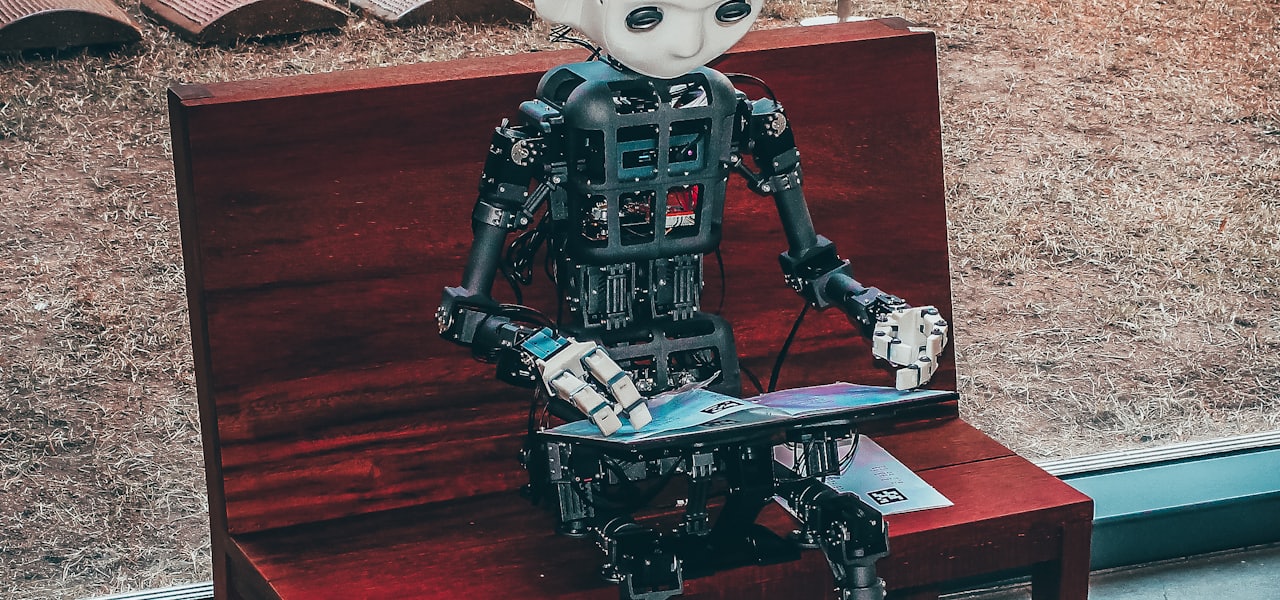
An autonomous agent is an artificial intelligence (AI) system that can perform complex tasks independently. == Definitions == There are various definitions of autonomous agent. According to Brustoloni (1991): "Autonomous agents are systems capable of autonomous, purposeful action in the real world." According to Maes (1995): "Autonomous agents are computational systems that inhabit some complex dynamic environment, sense and act autonomously in this environment, and by doing so realize a set of goals or tasks for which they are designed." Franklin and Graesser (1997) review different definitions and propose their definition: "An autonomous agent is a system situated within and a part of an environment that senses that environment and acts on it, over time, in pursuit of its own agenda and so as to effect what it senses in the future." They explain that: "Humans and some animals are at the high end of being an agent, with multiple, conflicting drives, multiples senses, multiple possible actions, and complex sophisticated control structures. At the low end, with one or two senses, a single action, and an absurdly simple control structure we find a thermostat." == Agent appearance == Lee et al. (2015) post safety issue from how the combination of external appearance and internal autonomous agent have impact on human reaction about autonomous vehicles. Their study explores the human-like appearance agent and high level of autonomy are strongly correlated with social presence, intelligence, safety and trustworthiness. In specific, appearance impacts most on affective trust while autonomy impacts most on both affective and cognitive domain of trust where cognitive trust is characterized by knowledge-based factors and affective trust is largely emotion driven. == Applications == Agentic AI systems: Advanced AI agents that can scope out projects and complete them with necessary tools, representing a significant evolution from simple task-oriented systems. Internet of things (IoT) Integration: Autonomous agents increasingly interact with IoT devices, enabling smart home systems, industrial monitoring, and urban infrastructure management. Collaborative software development: Tools like Cognition AI's Devin aim to create autonomous software engineers capable of complex reasoning, planning, and completing engineering tasks requiring thousands of decisions. Enterprise automation: Business process automation platforms like Salesforce's Agentforce provide autonomous bots for various service functions. == Challenges and considerations == Uncertainty and incomplete information: Autonomous agents must make decisions with limited or uncertain information about their environment and future states. Integration complexity: Incorporating autonomous agents into existing systems and workflows can be technically challenging and resource-intensive. Scalability: As systems become more complex and more agents are used, maintaining coordination and avoiding conflicts becomes increasingly difficult. Trust: Research has shown the combination of external appearance and internal autonomous capabilities significantly impacts human reactions and trust. Lee et al. (2015) found that human-like appearance and high levels of autonomy are strongly correlated with social presence, intelligence, safety, and trustworthiness perceptions. Specifically, appearance impacts affective trust most significantly, while autonomy affects both affective and cognitive trust domains, where affective trust is emotionally driven, and cognitive trust is characterized by knowledge-based factors. Vulnerability to manipulation: Researchers from Harvard, MIT and other educational institutions found that AI agents could become vulnerable to manipulation and could perform detrimental actions in the process of being helpful. == Ethical and regulatory concerns == Accountability: Determining responsibility when autonomous agents make incorrect or harmful decisions remains a complex issue. Privacy and security: autonomous agents often require access to sensitive data, raising concerns about data protection and system security.
Time series
In mathematics, a time series is a sequence of data points indexed, listed, or graphed in chronological order. Most commonly, a time series consists of observations recorded at successive equally spaced points in time. Thus, it represents a form of discrete-time data. A time series may describe measurements collected over seconds, days, years, or even centuries. Common examples include heights of ocean tides, counts of sunspots, daily temperature readings, and the closing values of stock market indices such as the Dow Jones Industrial Average. A time series is often visualized using a run chart (a type of temporal line chart), which helps identify patterns such as trends, seasonal effects, and irregular fluctuations. Time series are widely used in statistics, actuarial science, signal processing, pattern recognition, econometrics, mathematical finance, weather forecasting, earthquake prediction, electroencephalography, control engineering, astronomy, communications engineering, and many other areas of applied science and engineering that involve temporal measurements. Time series analysis comprises methods for analyzing time series data in order to extract meaningful statistics and other characteristics of the data. Time series forecasting is the use of a model to predict future values based on previously observed values. Generally, time series data is modeled as a stochastic process. While regression analysis is often employed in such a way as to test relationships between one or more different time series, this type of analysis is not usually called "time series analysis", which refers in particular to relationships between different points in time within a single series. Time series data have a natural temporal ordering. This makes time series analysis distinct from cross-sectional studies, in which there is no natural ordering of the observations (e.g. explaining people's wages by reference to their respective education levels, where the individuals' data could be entered in any order). Time series analysis is also distinct from spatial data analysis where the observations typically relate to geographical locations (e.g. accounting for house prices by the location as well as the intrinsic characteristics of the houses). A stochastic model for a time series will generally reflect the fact that observations close together in time will be more closely related than observations further apart. In addition, time series models will often make use of the natural one-way ordering of time so that values for a given period will be expressed as deriving in some way from past values, rather than from future values (see time reversibility). Time series analysis can be applied to real-valued, continuous data, discrete numeric data, or discrete symbolic data (i.e. sequences of characters, such as letters and words in the English language). == Methods for analysis == Methods for time series analysis may be divided into two classes: frequency-domain methods and time-domain methods. The former include spectral analysis and wavelet analysis; the latter include auto-correlation and cross-correlation analysis. In the time domain, correlation and analysis can be made in a filter-like manner using scaled correlation, thereby mitigating the need to operate in the frequency domain. Additionally, time series analysis techniques may be divided into parametric and non-parametric methods. The parametric approaches assume that the underlying stationary stochastic process has a certain structure which can be described using a small number of parameters (for example, using an autoregressive or moving-average model). In these approaches, the task is to estimate the parameters of the model that describes the stochastic process. By contrast, non-parametric approaches explicitly estimate the covariance or the spectrum of the process without assuming that the process has any particular structure. Methods of time series analysis may also be divided into linear and non-linear, and univariate and multivariate. == Panel data == A time series is one type of panel data. Panel data is the general class, a multidimensional data set, whereas a time series data set is a one-dimensional panel (as is a cross-sectional dataset). A data set may exhibit characteristics of both panel data and time series data. One way to tell is to ask what makes one data record unique from the other records. If the answer is the time data field, then this is a time series data set candidate. If determining a unique record requires a time data field and an additional identifier which is unrelated to time (e.g. student ID, stock symbol, country code), then it is panel data candidate. If the differentiation lies on the non-time identifier, then the data set is a cross-sectional data set candidate. == Analysis == There are several types of motivation and data analysis available for time series which are appropriate for different purposes. === Motivation === In the context of statistics, econometrics, quantitative finance, seismology, meteorology, and geophysics the primary goal of time series analysis is forecasting. In the context of signal processing, control engineering and communication engineering it is used for signal detection. Other applications are in data mining, pattern recognition and machine learning, where time series analysis can be used for clustering, classification, query by content, anomaly detection as well as forecasting. === Exploratory analysis === A simple way to examine a regular time series is manually with a line chart. The datagraphic shows tuberculosis deaths in the United States, along with the yearly change and the percentage change from year to year. The total number of deaths declined in every year until the mid-1980s, after which there were occasional increases, often proportionately - but not absolutely - quite large. A study of corporate data analysts found two challenges to exploratory time series analysis: discovering the shape of interesting patterns, and finding an explanation for these patterns. Visual tools that represent time series data as heat map matrices can help overcome these challenges. === Estimation, filtering, and smoothing === This approach may be based on harmonic analysis and filtering of signals in the frequency domain using the Fourier transform, and spectral density estimation. Its development was significantly accelerated during World War II by mathematician Norbert Wiener, electrical engineers Rudolf E. Kálmán, Dennis Gabor and others for filtering signals from noise and predicting signal values at a certain point in time. An equivalent effect may be achieved in the time domain, as in a Kalman filter; see filtering and smoothing for more techniques. Other related techniques include: Autocorrelation analysis to examine serial dependence Spectral analysis to examine cyclic behavior which need not be related to seasonality. For example, sunspot activity varies over 11 year cycles. Other common examples include celestial phenomena, weather patterns, neural activity, commodity prices, and economic activity. Separation into components representing trend, seasonality, slow and fast variation, and cyclical irregularity: see trend estimation and decomposition of time series === Curve fitting === Curve fitting is the process of constructing a curve, or mathematical function, that has the best fit to a series of data points, possibly subject to constraints. Curve fitting can involve either interpolation, where an exact fit to the data is required, or smoothing, in which a "smooth" function is constructed that approximately fits the data. A related topic is regression analysis, which focuses more on questions of statistical inference such as how much uncertainty is present in a curve that is fit to data observed with random errors. Fitted curves can be used as an aid for data visualization, to infer values of a function where no data are available, and to summarize the relationships among two or more variables. Extrapolation refers to the use of a fitted curve beyond the range of the observed data, and is subject to a degree of uncertainty since it may reflect the method used to construct the curve as much as it reflects the observed data. For processes that are expected to generally grow in magnitude one of the curves in the graphic (and many others) can be fitted by estimating their parameters. The construction of economic time series involves the estimation of some components for some dates by interpolation between values ("benchmarks") for earlier and later dates. Interpolation is estimation of an unknown quantity between two known quantities (historical data), or drawing conclusions about missing information from the available information ("reading between the lines"). Interpolation is useful where the data surrounding the missing data is available and its trend, seasonality, and longer-term cycles are known. This is often done by using a relat
Agent verification
Agent verification is activity to gain assurances that purposeful artificial constructs act in accordance with their specifications. While primitive forms of inorganic agents have been used in manufacturing for centuries, the study of artificial agents did not begin until the mid 20th century. Foundational work on such agents was closely bound with the emergence of artificial intelligence as an academic discipline. Early agents deployed for industrial control systems and in computing were often controlled by quite simple logic however, not involving artificial intelligence as such. When deployed as part of a multi-agent system, even such simple agents could require special agent orientated testing methods, as their collective behaviour was challenging to verify with traditional testing techniques. Difficulties in providing assurances that agents will not behave in dangerous ways became more prevalent after the introduction of LLM agents, especially after the rapid acceleration of their deployment in 2025. The verification of agent behaviour can be conducted by formal or informal methods. Informal verification requires less mathematical skill. But when agents are part of systems where errors have significant risks — such as danger to human life, environmental damage or major financial loss — formal verification is preferred. Both regulators and system designers themselves like formal verification as it provides a high degree of mathematical certainty. It is not however always possible to formally test all aspects of an agent based system's behaviour, especially where newer LLM based agents are concerned, due in part to their high degree of autonomy. Accordingly, agent verification for low impact deployments might be carried out only with informal methods, while for high impact deployments, it may be performed with a mix of formal and informal techniques. == Terminology == In academia, the term agent verification is often defined to mean activity concerned with gaining assurance that the agent behaves in accordance with its specification - whether by processes such as testing or simulation. 'Verification' is typically contrasted with 'validation', the latter meaning activity concerned with checking that the specification itself meets user or real world needs. Such definitions are not universally adhered to however - for example, in some workplaces and documents, the words 'verification' and 'validation' can be used synonymously. Efforts to gain confidence in Agents have intensified sharply since 2025 due to the rapid roll out of LLM agents; different terms are sometimes used in the commercial sector. Here the term 'agent verification' can be used in the same sense as it is in academia, but sometimes the same activity can be covered by more ambiguous and wider ranging terms such as 'Agent governance' , 'Agent observability' or 'AI agent policing'. == History == === Classical agents === The theoretical underpinnings for artificial (inorganic) agents emerged in the mid 20th century, with establishment of cybernetics and artificial intelligence. Oliver Selfridge's 1958 Pandemonium - A Paradigm for Learning paper was an important early theoretical contribution in establishing agent oriented architecture. Practical implementations of agents for real world applications began to become widespread in the 1990s, after the introduction of the belief–desire–intention software model (BDI), and agent-oriented programming. Pure digital agents were deployed in computer infrastructure for purposes such as monitoring, while agents connected to real-world sensors and actuators were increasingly used in industrial control systems. While the concept of artificial agents was interwoven with early artificial intelligence studies right from the start, early agents lacked general purpose reasoning capabilities, often only having simple if then logic. Even a device as simple as a thermostat, which has a sensor and a means of acting, can be considered a proto agent in this sense. Verifying the behaviours of a simple single agent system is not generally especially difficult, but it can be a different matter when several simple agents coexist in the same system. Craig Reynolds's work on boids showed that relatively complex, "intelligent" behaviour can emerge from a number of such simple agents working together in a Multi-agent system (MAS). By the 1990s, even the behaviour of a single agent system could sometimes be quite complex; in accordance with the Belief–desire–intention software model, agents could have believes that might evolve over time. Agents were increasingly introduced that were controlled by quite large decision tree models, which had new vulnerabilities to adversarial attack. It was becoming increasingly apparent that traditional software verification methods had limitations for testing such agents, or even for the more primitive type of agents when they were deployed as part of a MAS. It was the use of agents for industrial control systems, sometimes associated with robotics, that lent urgency to the practice of agent verification. Informal testing might be acceptable for digital agents used say to monitor whether each of an organisation's computers are properly licensed. But with an increasing potential for faulty agents to result in a failure that might cause a large fire to break out at a chemical manufacturing plant, a botched medical operation, or even a crashed aircraft, the need to develop reliable means of verifying behaviour of such agents was considered urgent. The Foundation for Intelligent Physical Agents was established in 1996. From the late 90s, a growing number of industry and university based scientists began working on the problem, with researchers publishing papers on the verification of both single and multi agent systems. Much of this work showed how formal verification techniques like model checking could be used to gain a high level of assurance that agent based systems would conform with their specification. A 2018 systematic review covering 231 studies found that model checking was the most common technique for agent verification, with theorem proving the second most commonly used formal verification method. In the first two decades of the 20th century, agents run by AI became more common, with Siri and Alexa being well known examples. But such agents still lacked general reasoning capabilities and did not pose new pressing problems for agent verification. === General purpose reasoning agents === The advent of LLMs created huge potential for further use of artificial agents, as agents based on them could have general purpose cognitive abilities. Agents run by LLMs (and occasionally non-LLM foundation models) have similar vulnerability to adversarial attack as those run by decision tree models. The wider scope of actions for LLM agents has created new challenges for their verification, over and above those present for classical agents. For example, the LLM's neural network endows it with infinite domains, an especial challenge for traditional formal verification techniques. Academics began to study the problems involved in verifying LLM agents from 2018. Deployment of such agents began to accelerate in late 2023 after OpenAI's "function-calling" API was made available, and especially after Anthropic's late 2024 introduction of Model Context Protocol (MCP), a standardised way for LLM agents to gain contextual awareness, and to act on the world by calling various external tools. The rapid rollout of LLM agents following MCP's release has seen the task of agent verification receive increased attention within academia, and also from the private sector. In 2024 and 2025 several startups focusing on LLM agent verification have been founded in both Europe and the US to meet growing demand. == Approaches == === Formal verification === Formal verification involves proving the correctness of some or all aspects of a system using mathematical methods. Such methods can range from manual formal proof, to verification assisted with automated theorem provers like Isabelle. For agent verification, model checking is by far the most frequently used formal verification method; for pre-LLM models it was often complemented with techniques using computation tree logic. Another common method is theorem proving. Formal verification provides a higher degree of confidence than informal methods, but it is not always used, even when it is possible. Sometimes a person or organisation developing software agents won't have the necessary skills, or may not see it as worth the effort if the agent(s) will not have the ability to cause much harm even if they malfunction. When agents are deployed in systems where errors could have serious consequences, the ability of formal verification methods to provide mathematical certainty tends to be strongly preferred by both regulators and designers themselves. But even for high impact systems, formal verificatio
Template matching
Template matching is a technique in digital image processing for finding small parts of an image which match a template image. It can be used for quality control in manufacturing, navigation of mobile robots, or edge detection in images. The main challenges in a template matching task are detection of occlusion, when a sought-after object is partly hidden in an image; detection of non-rigid transformations, when an object is distorted or imaged from different angles; sensitivity to illumination and background changes; background clutter; and scale changes. == Feature-based approach == The feature-based approach to template matching relies on the extraction of image features, such as shapes, textures, and colors, that match the target image or frame. This approach is usually achieved using neural networks and deep-learning classifiers such as VGG, AlexNet, and ResNet.Convolutional neural networks (CNNs), which many modern classifiers are based on, process an image by passing it through different hidden layers, producing a vector at each layer with classification information about the image. These vectors are extracted from the network and used as the features of the image. Feature extraction using deep neural networks, like CNNs, has proven extremely effective has become the standard in state-of-the-art template matching algorithms. This feature-based approach is often more robust than the template-based approach described below. As such, it has become the state-of-the-art method for template matching, as it can match templates with non-rigid and out-of-plane transformations, as well as high background clutter and illumination changes. == Template-based approach == For templates without strong features, or for when the bulk of a template image constitutes the matching image as a whole, a template-based approach may be effective. Since template-based matching may require sampling of a large number of data points, it is often desirable to reduce the number of sampling points by reducing the resolution of search and template images by the same factor before performing the operation on the resultant downsized images. This pre-processing method creates a multi-scale, or pyramid, representation of images, providing a reduced search window of data points within a search image so that the template does not have to be compared with every viable data point. Pyramid representations are a method of dimensionality reduction, a common aim of machine learning on data sets that suffer the curse of dimensionality. == Common challenges == In instances where the template may not provide a direct match, it may be useful to implement eigenspaces to create templates that detail the matching object under a number of different conditions, such as varying perspectives, illuminations, color contrasts, or object poses. For example, if an algorithm is looking for a face, its template eigenspaces may consist of images (i.e., templates) of faces in different positions to the camera, in different lighting conditions, or with different expressions (i.e., poses). It is also possible for a matching image to be obscured or occluded by an object. In these cases, it is unreasonable to provide a multitude of templates to cover each possible occlusion. For example, the search object may be a playing card, and in some of the search images, the card is obscured by the fingers of someone holding the card, or by another card on top of it, or by some other object in front of the camera. In cases where the object is malleable or poseable, motion becomes an additional problem, and problems involving both motion and occlusion become ambiguous. In these cases, one possible solution is to divide the template image into multiple sub-images and perform matching on each subdivision. == Deformable templates in computational anatomy == Template matching is a central tool in computational anatomy (CA). In this field, a deformable template model is used to model the space of human anatomies and their orbits under the group of diffeomorphisms, functions which smoothly deform an object. Template matching arises as an approach to finding the unknown diffeomorphism that acts on a template image to match the target image. Template matching algorithms in CA have come to be called large deformation diffeomorphic metric mappings (LDDMMs). Currently, there are LDDMM template matching algorithms for matching anatomical landmark points, curves, surfaces, volumes. == Template-based matching explained using cross correlation or sum of absolute differences == A basic method of template matching sometimes called "Linear Spatial Filtering" uses an image patch (i.e., the "template image" or "filter mask") tailored to a specific feature of search images to detect. This technique can be easily performed on grey images or edge images, where the additional variable of color is either not present or not relevant. Cross correlation techniques compare the similarities of the search and template images. Their outputs should be highest at places where the image structure matches the template structure, i.e., where large search image values get multiplied by large template image values. This method is normally implemented by first picking out a part of a search image to use as a template. Let S ( x , y ) {\displaystyle S(x,y)} represent the value of a search image pixel, where ( x , y ) {\displaystyle (x,y)} represents the coordinates of the pixel in the search image. For simplicity, assume pixel values are scalar, as in a greyscale image. Similarly, let T ( x t , y t ) {\textstyle T(x_{t},y_{t})} represent the value of a template pixel, where ( x t , y t ) {\textstyle (x_{t},y_{t})} represents the coordinates of the pixel in the template image. To apply the filter, simply move the center (or origin) of the template image over each point in the search image and calculate the sum of products, similar to a dot product, between the pixel values in the search and template images over the whole area spanned by the template. More formally, if ( 0 , 0 ) {\displaystyle (0,0)} is the center (or origin) of the template image, then the cross correlation T ⋆ S {\displaystyle T\star S} at each point ( x , y ) {\displaystyle (x,y)} in the search image can be computed as: ( T ⋆ S ) ( x , y ) = ∑ ( x t , y t ) ∈ T T ( x t , y t ) ⋅ S ( x t + x , y t + y ) {\displaystyle (T\star S)(x,y)=\sum _{(x_{t},y_{t})\in T}T(x_{t},y_{t})\cdot S(x_{t}+x,y_{t}+y)} For convenience, T {\displaystyle T} denotes both the pixel values of the template image as well as its domain, the bounds of the template. Note that all possible positions of the template with respect to the search image are considered. Since cross correlation values are greatest when the values of the search and template pixels align, the best matching position ( x m , y m ) {\displaystyle (x_{m},y_{m})} corresponds to the maximum value of T ⋆ S {\displaystyle T\star S} over S {\displaystyle S} . Another way to handle translation problems on images using template matching is to compare the intensities of the pixels, using the sum of absolute differences (SAD) measure. To formulate this, let I S ( x s , y s ) {\displaystyle I_{S}(x_{s},y_{s})} and I T ( x t , y t ) {\displaystyle I_{T}(x_{t},y_{t})} denote the light intensity of pixels in the search and template images with coordinates ( x s , y s ) {\displaystyle (x_{s},y_{s})} and ( x t , y t ) {\displaystyle (x_{t},y_{t})} , respectively. Then by moving the center (or origin) of the template to a point ( x , y ) {\displaystyle (x,y)} in the search image, as before, the sum of absolute differences between the template and search pixel intensities at that point is: S A D ( x , y ) = ∑ ( x t , y t ) ∈ T | I T ( x t , y t ) − I S ( x t + x , y t + y ) | {\displaystyle SAD(x,y)=\sum _{(x_{t},y_{t})\in T}\left\vert I_{T}(x_{t},y_{t})-I_{S}(x_{t}+x,y_{t}+y)\right\vert } With this measure, the lowest SAD gives the best position for the template, rather than the greatest as with cross correlation. SAD tends to be relatively simple to implement and understand, but it also tends to be relatively slow to execute. A simple C++ implementation of SAD template matching is given below. == Implementation == In this simple implementation, it is assumed that the above described method is applied on grey images: This is why Grey is used as pixel intensity. The final position in this implementation gives the top left location for where the template image best matches the search image. One way to perform template matching on color images is to decompose the pixels into their color components and measure the quality of match between the color template and search image using the sum of the SAD computed for each color separately. == Speeding up the process == In the past, this type of spatial filtering was normally only used in dedicated hardware solutions because of the computational complexity of the operation, however we can lessen this complexity b
Tensor (machine learning)
In machine learning, the term tensor informally refers to two different concepts: (i) a way of organizing data and (ii) a multilinear (tensor) transformation. Data may be organized in a multidimensional array (M-way array), informally referred to as a "data tensor"; however, in the strict mathematical sense, a tensor is a multilinear mapping over a set of domain vector spaces to a range vector space. Observations, such as images, movies, volumes, sounds, and relationships among words and concepts, stored in an M-way array ("data tensor"), may be analyzed either by artificial neural networks or tensor methods. Tensor decomposition factors data tensors into smaller tensors. Operations on data tensors can be expressed in terms of matrix multiplication and the Kronecker product. The computation of gradients, a crucial aspect of backpropagation, can be performed using software libraries such as PyTorch and TensorFlow. Computations are often performed on graphics processing units (GPUs) using CUDA, and on dedicated hardware such as Google's Tensor Processing Unit or Nvidia's Tensor core. These developments have greatly accelerated neural network architectures, and increased the size and complexity of models that can be trained. == History == A tensor is by definition a multilinear map. In mathematics, this may express a multilinear relationship between sets of algebraic objects. In physics, tensor fields, considered as tensors at each point in space, are useful in expressing mechanics such as stress or elasticity. In machine learning, the exact use of tensors depends on the statistical approach being used. In 2001, the field of signal processing and statistics were making use of tensor methods. Pierre Comon surveys the early adoption of tensor methods in the fields of telecommunications, radio surveillance, chemometrics and sensor processing. Linear tensor rank methods (such as, Parafac/CANDECOMP) analyzed M-way arrays ("data tensors") composed of higher order statistics that were employed in blind source separation problems to compute a linear model of the data. He noted several early limitations in determining the tensor rank and efficient tensor rank decomposition. In the early 2000s, multilinear tensor methods crossed over into computer vision, computer graphics and machine learning with papers by Vasilescu or in collaboration with Terzopoulos, such as Human Motion Signatures, TensorFaces TensorTextures and Multilinear Projection. Multilinear algebra, the algebra of higher-order tensors, is a suitable and transparent framework for analyzing the multifactor structure of an ensemble of observations and for addressing the difficult problem of disentangling the causal factors based on second order or higher order statistics associated with each causal factor. Tensor (multilinear) factor analysis disentangles and reduces the influence of different causal factors with multilinear subspace learning. When treating an image or a video as a 2- or 3-way array, i.e., "data matrix/tensor", tensor methods reduce spatial or time redundancies as demonstrated by Wang and Ahuja. Yoshua Bengio, Geoff Hinton and their collaborators briefly discuss the relationship between deep neural networks and tensor factor analysis beyond the use of M-way arrays ("data tensors") as inputs. One of the early uses of tensors for neural networks appeared in natural language processing. A single word can be expressed as a vector via Word2vec. Thus a relationship between two words can be encoded in a matrix. However, for more complex relationships such as subject-object-verb, it is necessary to build higher-dimensional networks. In 2009, the work of Sutskever introduced Bayesian Clustered Tensor Factorization to model relational concepts while reducing the parameter space. From 2014 to 2015, tensor methods become more common in convolutional neural networks (CNNs). Tensor methods organize neural network weights in a "data tensor", analyze and reduce the number of neural network weights. Lebedev et al. accelerated CNN networks for character classification (the recognition of letters and digits in images) by using 4D kernel tensors. == Definition == Let F {\displaystyle \mathbb {F} } be a field (such as the real numbers R {\displaystyle \mathbb {R} } or the complex numbers C {\displaystyle \mathbb {C} } ). A tensor T ∈ F I 1 × I 2 × … × I C {\displaystyle {\mathcal {T}}\in {\mathbb {F} }^{I_{1}\times I_{2}\times \ldots \times I_{C}}} is a multilinear transformation from a set of domain vector spaces to a range vector space: T : { F I 1 × F I 2 × … F I C } ↦ F I 0 {\displaystyle {\mathcal {T}}:\{{\mathbb {F} }^{I_{1}}\times {\mathbb {F} }^{I_{2}}\times \ldots {\mathbb {F} }^{I_{C}}\}\mapsto {\mathbb {F} }^{I_{0}}} Here, C {\displaystyle C} and I 0 , I 1 , … , I C {\displaystyle I_{0},I_{1},\ldots ,I_{C}} are positive integers, and ( C + 1 ) {\displaystyle (C+1)} is the number of modes of a tensor (also known as the number of ways of a multi-way array). The dimensionality of mode c {\displaystyle c} is I c {\displaystyle I_{c}} , for 0 ≤ c ≤ C {\displaystyle 0\leq c\leq C} . In statistics and machine learning, an image is vectorized when viewed as a single observation, and a collection of vectorized images is organized as a "data tensor". For example, a set of facial images { d i p , i e , i l , i v ∈ R I X } {\displaystyle \{{\mathbb {d} }_{i_{p},i_{e},i_{l},i_{v}}\in {\mathbb {R} }^{I_{X}}\}} with I X {\displaystyle I_{X}} pixels that are the consequences of multiple causal factors, such as a facial geometry i p ( 1 ≤ i p ≤ I P ) {\displaystyle i_{p}(1\leq i_{p}\leq I_{P})} , an expression i e ( 1 ≤ i e ≤ I E ) {\displaystyle i_{e}(1\leq i_{e}\leq I_{E})} , an illumination condition i l ( 1 ≤ i l ≤ I L ) {\displaystyle i_{l}(1\leq i_{l}\leq I_{L})} , and a viewing condition i v ( 1 ≤ i v ≤ I V ) {\displaystyle i_{v}(1\leq i_{v}\leq I_{V})} may be organized into a data tensor (ie. multiway array) D ∈ R I X × I P × I E × I L × V {\displaystyle {\mathcal {D}}\in {\mathbb {R} }^{I_{X}\times I_{P}\times I_{E}\times I_{L}\times V}} where I P {\displaystyle I_{P}} are the total number of facial geometries, I E {\displaystyle I_{E}} are the total number of expressions, I L {\displaystyle I_{L}} are the total number of illumination conditions, and I V {\displaystyle I_{V}} are the total number of viewing conditions. Tensor factorizations methods such as TensorFaces and multilinear (tensor) independent component analysis factorizes the data tensor into a set of vector spaces that span the causal factor representations, where an image is the result of tensor transformation T {\displaystyle {\mathcal {T}}} that maps a set of causal factor representations to the pixel space. Another approach to using tensors in machine learning is to embed various data types directly. For example, a grayscale image, commonly represented as a discrete 2-way array D ∈ R I R X × I C X {\displaystyle {\mathbf {D} }\in {\mathbb {R} }^{I_{RX}\times I_{CX}}} with dimensionality I R X × I C X {\displaystyle I_{RX}\times I_{CX}} where I R X {\displaystyle I_{RX}} are the number of rows and I C X {\displaystyle I_{CX}} are the number of columns. When an image is treated as 2-way array or 2nd order tensor (i.e. as a collection of column/row observations), tensor factorization methods compute the image column space, the image row space and the normalized PCA coefficients or the ICA coefficients. Similarly, a color image with RGB channels, D ∈ R N × M × 3 . {\displaystyle {\mathcal {D}}\in \mathbb {R} ^{N\times M\times 3}.} may be viewed as a 3rd order data tensor or 3-way array.-------- In natural language processing, a word might be expressed as a vector v {\displaystyle v} via the Word2vec algorithm. Thus v {\displaystyle v} becomes a mode-1 tensor v ↦ A ∈ R N . {\displaystyle v\mapsto {\mathcal {A}}\in \mathbb {R} ^{N}.} The embedding of subject-object-verb semantics requires embedding relationships among three words. Because a word is itself a vector, subject-object-verb semantics could be expressed using mode-3 tensors v a × v b × v c ↦ A ∈ R N × N × N . {\displaystyle v_{a}\times v_{b}\times v_{c}\mapsto {\mathcal {A}}\in \mathbb {R} ^{N\times N\times N}.} In practice the neural network designer is primarily concerned with the specification of embeddings, the connection of tensor layers, and the operations performed on them in a network. Modern machine learning frameworks manage the optimization, tensor factorization and backpropagation automatically. === As unit values === Tensors may be used as the unit values of neural networks which extend the concept of scalar, vector and matrix values to multiple dimensions. The output value of single layer unit y m {\displaystyle y_{m}} is the sum-product of its input units and the connection weights filtered through the activation function f {\displaystyle f} : y m = f ( ∑ n x n u m , n ) , {\displaystyle y_{m}=f\left(\sum _{n}x_{n}u_{m,n}\right),} where y m ∈ R .